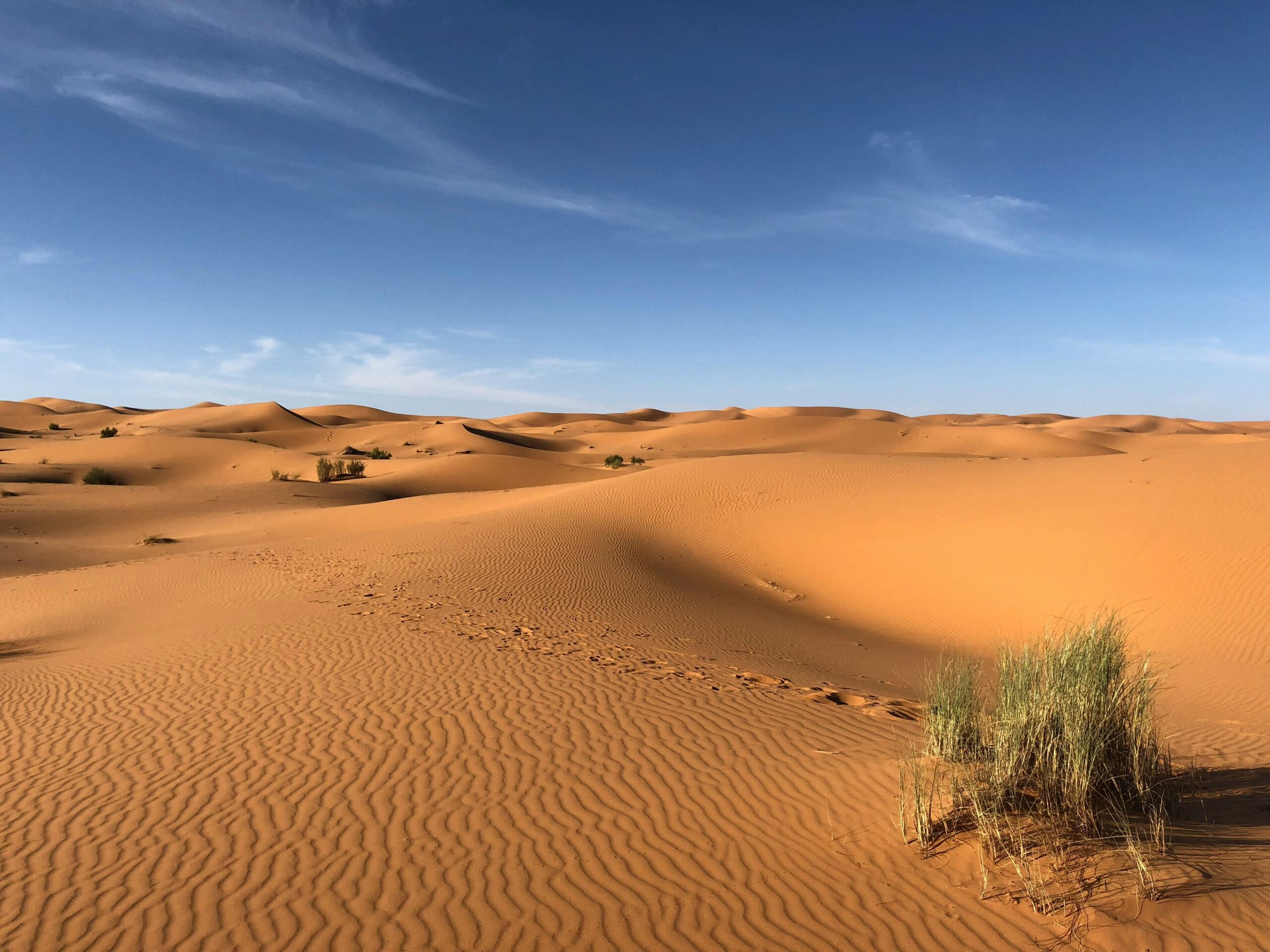
Imagine the vast expanse of today’s Sahara.
Endless dunes, relentless sun and near-lifeless terrain.
Now imagine it as a thriving green frontier: dotted with lakes, grasslands, rivers and woods.
That’s precisely how the Sahara once was.
During the African Humid Period (about 14,500 to 5,000 years ago), this desert bore the lush garb of savannah, powered by monsoonal rains and rich ecosystems.
Animals from hippos, elephants, giraffes and even crocodiles are believed to roam freely across regions that’s now swept by sand.
Milankovitch cycles
Science has traced the Sahara’s greening to the Milankovitch cycles, specifically orbital precession or Earth’s slow wobble every ~21,000 years.
When the Northern Hemisphere’s summers align closer to the sun, monsoon rains surge northward and it drenches the Sahara and fuels a verdant transformation.
These humid chapters were not one-offs; records show over 230 greening events over the past eight million years.
Rock Art & Archaeology
Giant murals in places like Tassili n’Ajjer (Algeria) and Tadrart Acacus (Libya) tell the story in vivid details: Painted herds of cattle, women by watering holes, elephants and hippos wading in lakes.
Fossils & Pollens
Pollen trapped in ancient lakebeds shows that now-arid landscapes once supported woodland and grassland species. Fossil bones of large animals like those of elephants, giraffes further cements that evidence.
Geo clues
In regions like Ténéré (in present-day Niger), fossils of prehistoric reptiles and root remnants of trees confirm that some parts were once lush forests.
Archaeological Sites
At Uan Muhuggiag in southwestern Libya, pollen studies and satellite mapping of fossil riverbeds show savannah-like conditions between around 12,000 and 5,000 years ago.
Saharan inhabitants weren’t merely transient visitors—they thrived. Communities held tools, pottery, and rock art during the humid phase. As the climate shifted, people migrated toward the Nile Valley or developed early agriculture in Sahelian fringes.WikipediaAfrican History Extra
Groundbreaking ancient DNA from 7,000-year-old mummies at Takarkori shelter in Libya reveals a unique, isolated lineage. These people practiced animal husbandry but remained genetically distinct from both sub-Saharan and Eurasian groups. They likely persisted until the Sahara dried around 3,000 BC.